Loose lead walking is one of the biggest challenges many owners face. You clip on the lead, step outside, and suddenly it feels like your dog is competing in a sled race. The walk becomes a tug-of-war instead of a calm, enjoyable partnership.
One simple yet powerful tool to shift the dynamic is a behaviour called “touch”—teaching your dog to target your hand with their nose on cue.
What is “Touch”?
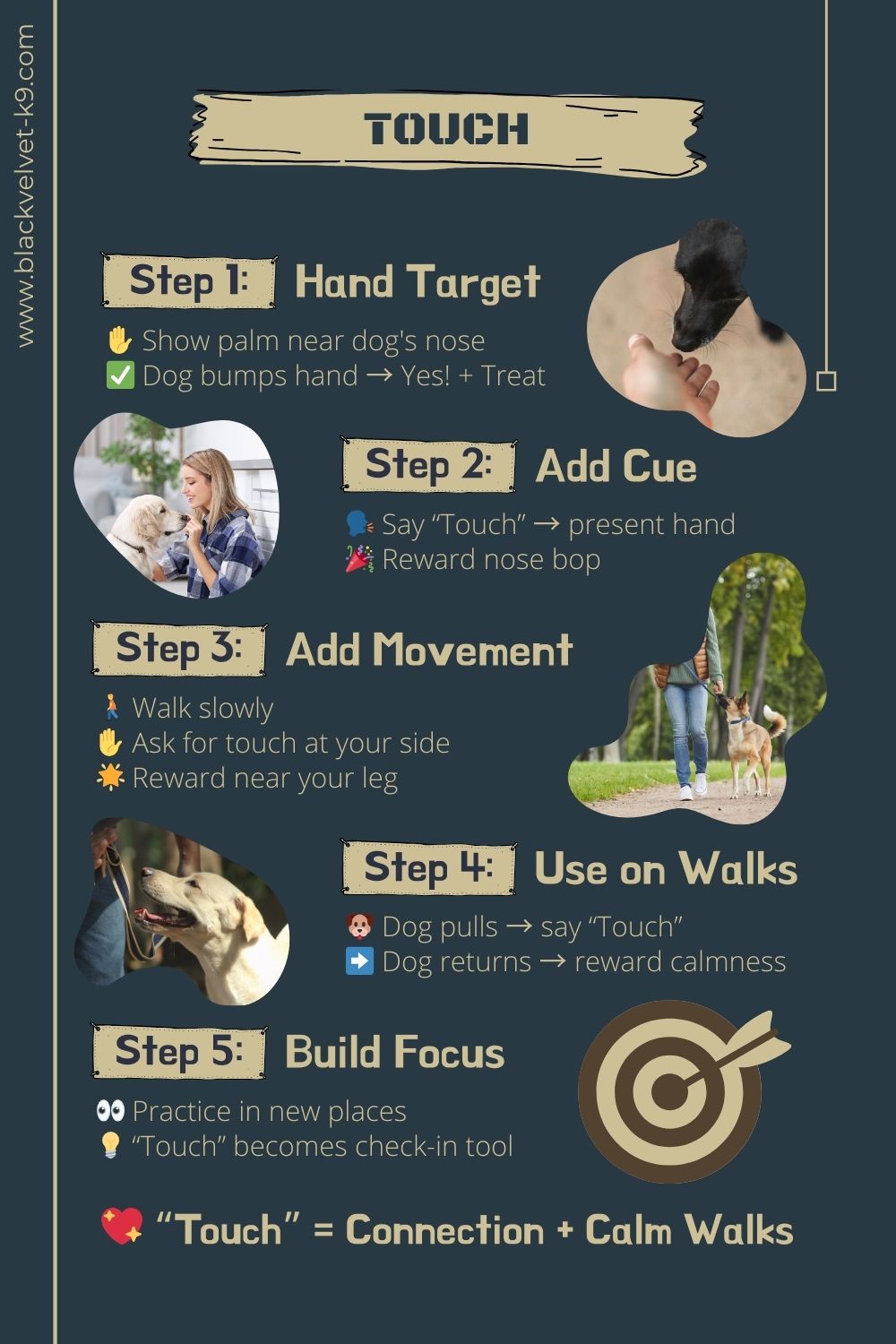
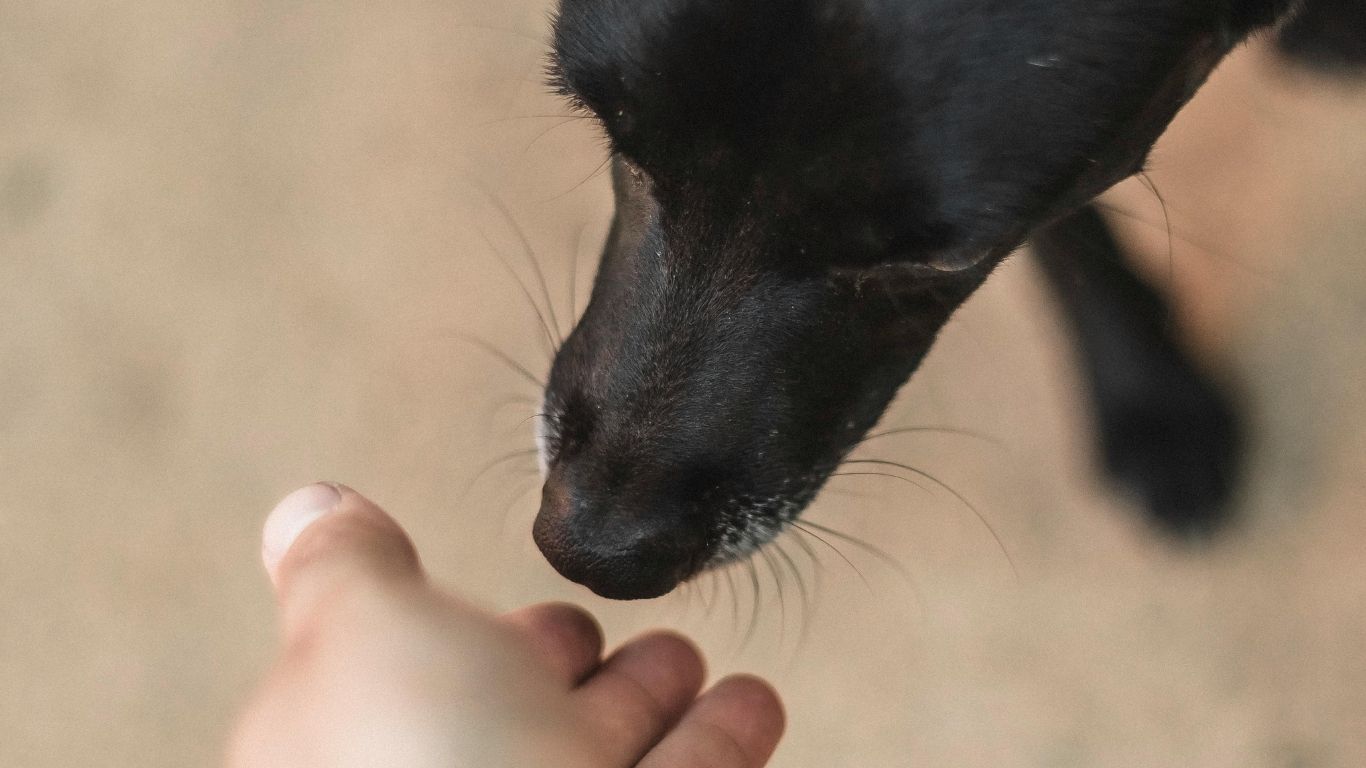
“Touch” is a targeting exercise where you present your hand, say the cue (e.g., “Touch”), and your dog bumps it with their nose. It’s easy to teach, highly rewarding for most dogs, and surprisingly versatile.
Why “Touch” Helps With Loose Lead Walking
-
Redirection from Pulling
Instead of pulling ahead, you can ask for a “touch” to bring your dog back toward you. It gently reorients their body and attention without force. -
Movement With Engagement
“Touch” works beautifully while walking. You can cue your dog to touch your hand at your side as you move, reinforcing the idea that good things happen near you—not at the end of the lead. -
Breaks the Chain of Overarousal
If your dog gets overexcited by another dog, person, or smell, asking for a quick “touch” gives them a simple, familiar task. It interrupts the pull-and-lunge cycle and channels energy into something constructive.
Why “Touch” Builds Owner Focus
Dogs who learn “touch” quickly associate your hand—and by extension, you—with fun, rewards, and direction. It becomes a go-to behaviour they can offer when unsure.
- On walks, it strengthens the idea that checking in with you pays off.
- At home, it can be used to redirect barking or jumping.
- For anxious or shy dogs, it provides a predictable way to interact safely.
How to Teach “Touch”
- Present Your Hand – Hold out your palm a few inches from your dog’s nose.
- Mark & Reward – The moment they sniff or bump it, mark with a click or “Yes!” and give a treat.
- Add the Cue – Once they reliably target your hand, say “Touch” before presenting your hand.
- Build Distance & Movement – Practice with your hand higher, lower, to the side, and while walking.
Keep sessions short and fun—most dogs pick this up in just a few tries.
Ted’s Story
When Max, a lively Labrador, started pulling me toward every lamppost and tree, I felt like my arm was coming out of its socket. Instead of battling the lead, I introduced “touch.” At first, he bumped my hand awkwardly, then his eyes lit up—he realised it was a game.
Soon, when he surged ahead, I’d cue “touch,” and he’d swing back toward me with a happy nose bop. Over time, he learned that walking beside me led to games and rewards, while pulling didn’t get him anywhere. The lead slackened, our walks slowed down, and our connection grew.
Final Thoughts
“Touch” may seem like a simple trick, but in practice it’s a powerful way to improve loose lead walking and strengthen focus. It redirects energy, encourages engagement, and turns training into a cooperative game rather than a struggle.
When your dog learns to love “touch,” they learn to love working with you. And that’s the real secret to calm, connected walks.