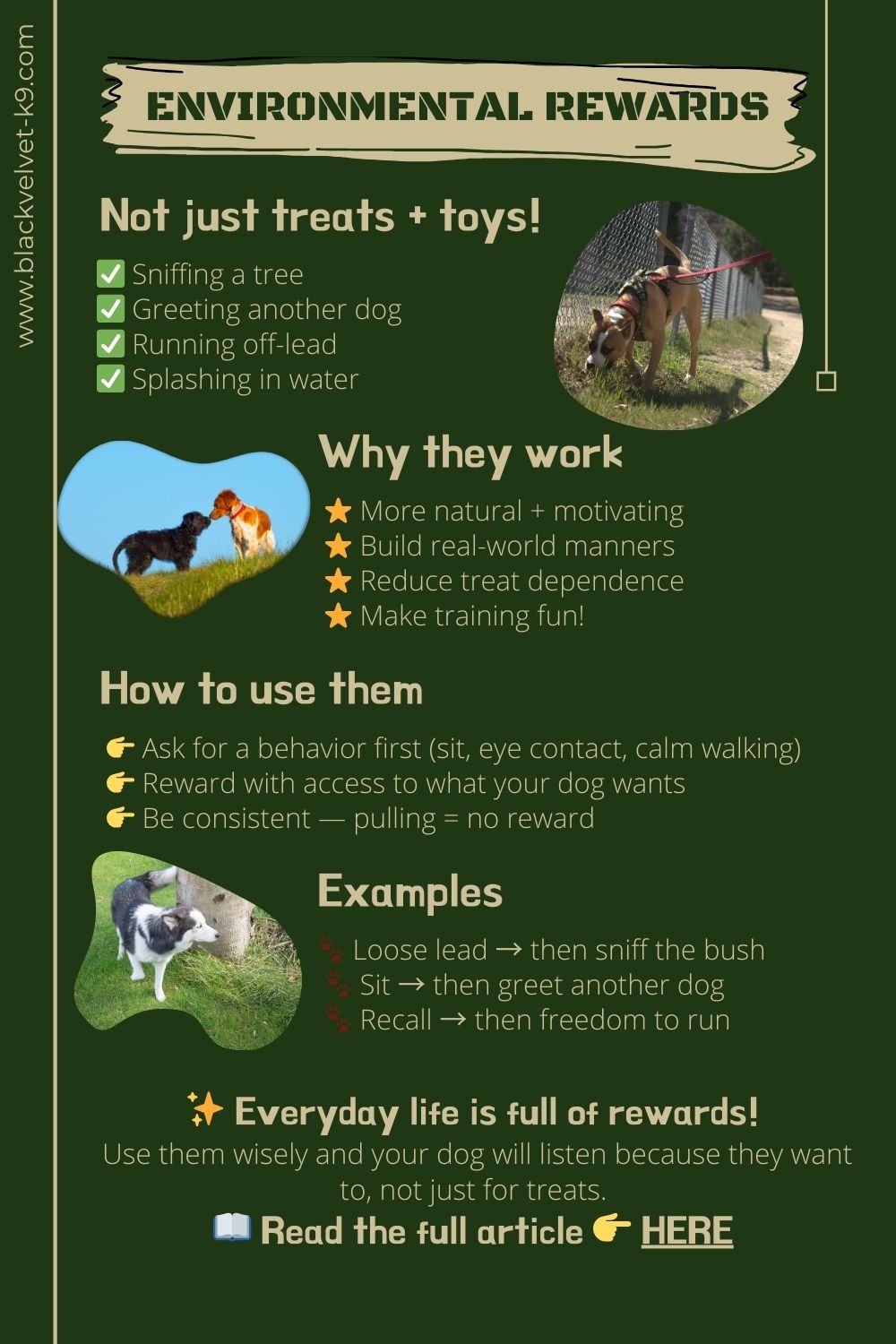
When most people think about dog training, they picture a pocket full of treats or a tug toy ready to go. And it’s true — food and toys are excellent rewards. They’re easy to deliver, most dogs love them, and they can help us teach new skills quickly.
But here’s the thing: treats and toys aren’t the only way to reward your dog. In fact, some of the most powerful motivators in your dog’s world are all around you — built into your daily walks, routines, and activities. These are called environmental rewards or contextual rewards, and when used thoughtfully, they can actually be more meaningful than a piece of chicken or a ball toss.
What Are Environmental Rewards?
Environmental rewards are the natural things your dog already finds exciting or enjoyable in their surroundings. These might include:
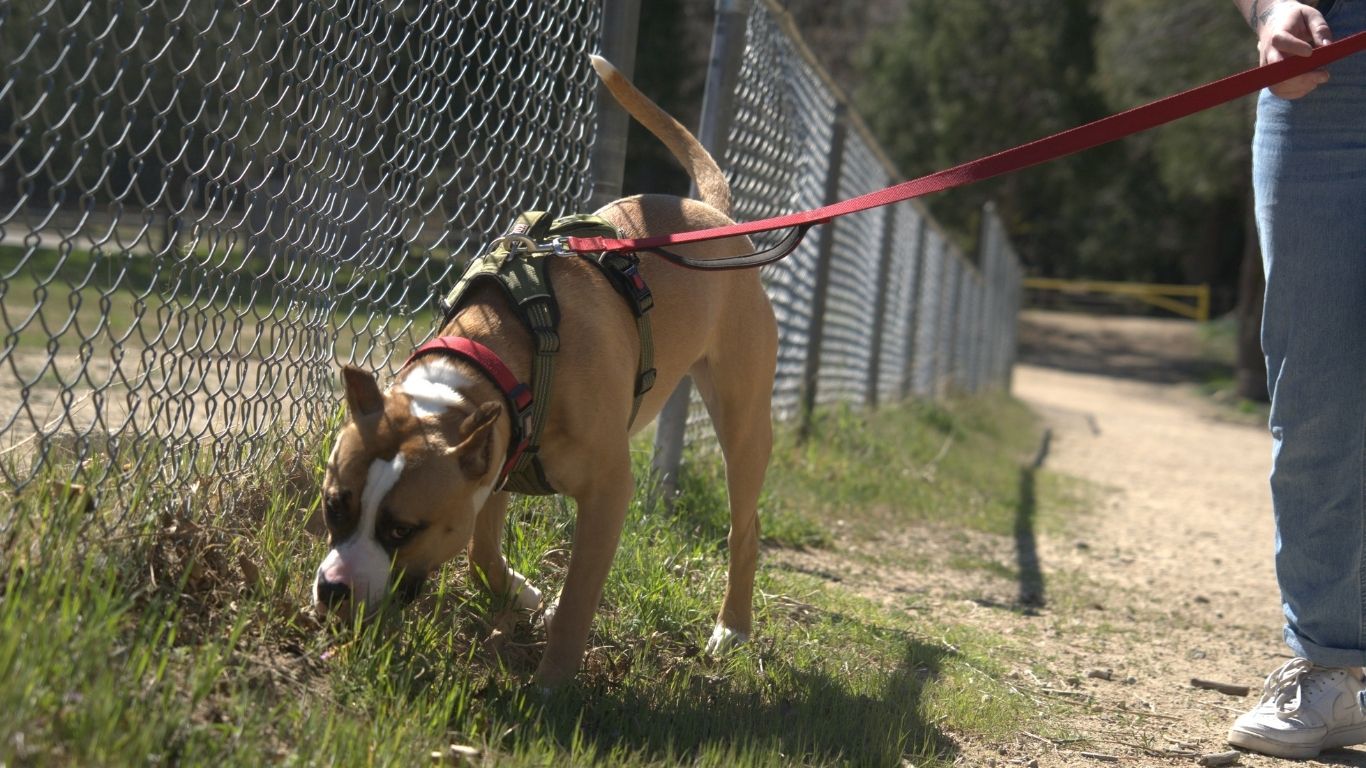
- Getting to sniff a tree or lamppost
- Greeting another dog on a walk
- Running off-lead in a safe area
- Chasing a ball that’s already rolling across the park
- Splashing into a stream or puddle
Instead of always reaching into your treat pouch, you can use access to these opportunities as a reward — but only if your dog gives you the behavior you’ve asked for first.
Why Environmental Rewards Work
-
They’re Natural to Your Dog
Dogs are explorers, sniffers, and social creatures. For many of them, getting to investigate their environment or interact with another dog is far more rewarding than a piece of kibble. -
They Strengthen Real-Life Training
If your dog learns that pulling gets them closer to another dog, then pulling is what they’ll keep doing. But if sitting politely and looking at you earns them that same greeting, you’ve just taught leash manners in a way that “sticks” outside the training session. -
They Reduce Treat Dependence
Food is a fantastic training tool, but some dogs become “treat dependent” if it’s the only motivator ever used. Environmental rewards broaden your toolbox and teach your dog that good behavior brings all sorts of positive outcomes.
Examples of Using Environmental Rewards
-
Loose Lead Walking: Instead of letting your dog drag you to the nearest bush, pause. When they return to your side or make eye contact, praise and then walk with them to the bush as a reward.
-
Recall Training: Call your dog, and when they come back, release them to run and play again. The freedom itself is the reward.
-
Polite Greetings: Ask your dog for a sit before meeting another dog. Once they sit calmly, allow the greeting. No sit? No greeting.
-
Impulse Control: At the park gate, ask for a moment of focus before unclipping the lead. Off-lead freedom becomes the “paycheck” for calm behavior.
How to Get Started
-
Know What Motivates Your Dog – Pay attention to what your dog really wants during your walks. Is it sniffing, greeting, running, or playing?
-
Set Clear Rules – Access to those rewards should only happen when your dog performs the behavior you’re looking for.
-
Be Consistent – If pulling works one day and sitting works the next, your dog will be confused. Consistency is key.
-
Mix with Other Rewards – You don’t have to ditch treats and toys. Instead, combine them with environmental rewards to keep training fun and varied.
The Big Picture
Using environmental rewards shifts your training from “bribery with treats” to real-life cooperation. You’re teaching your dog that listening to you unlocks the things they love most — whether that’s freedom, friends, or the joy of sniffing every tree on the block.
And here’s the best part: once your dog makes that connection, you’ll find they’re more motivated, more engaged, and more reliable — not just in the training ring, but in the real world where it matters most.
✨ Remember: Treats and toys are great, but the world itself is full of rewards your dog already cares about. Tap into those, and you’ll have a training partnership built on cooperation, trust, and a whole lot of tail wags.