
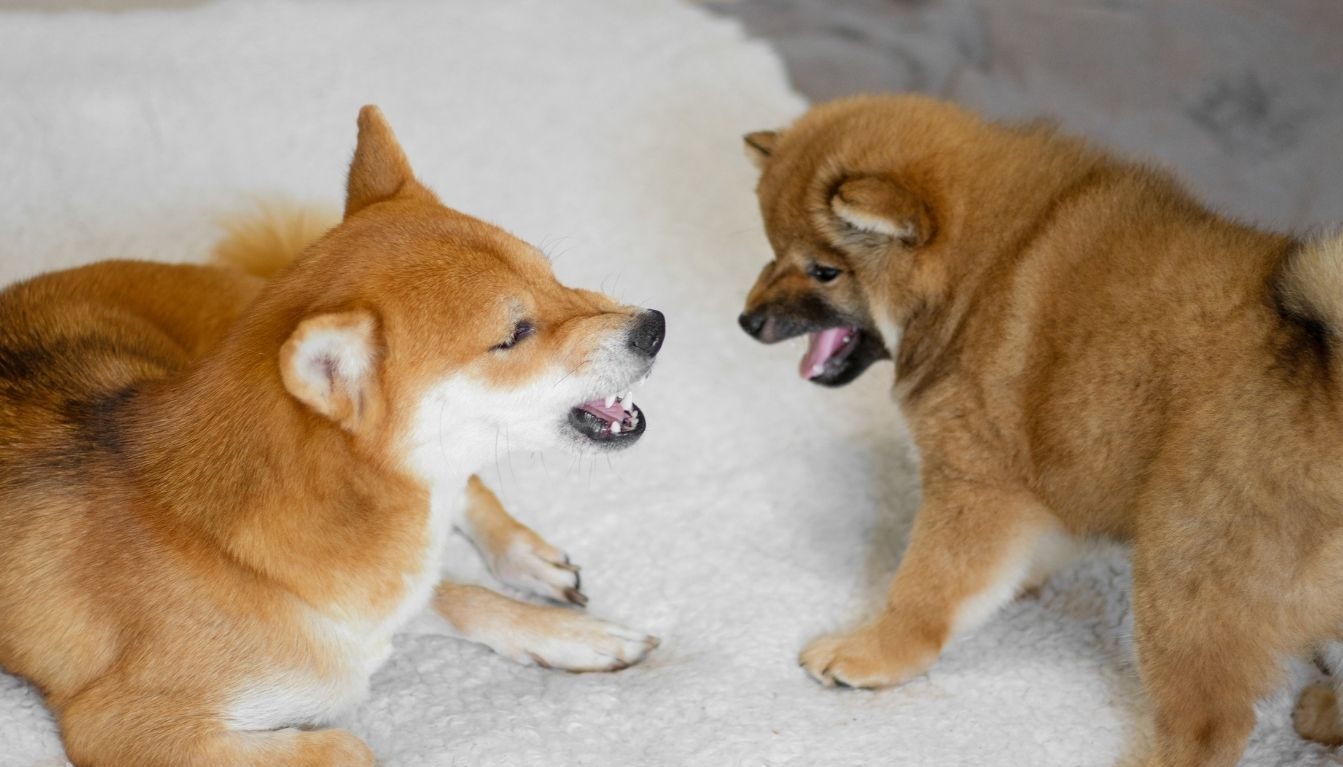
Dogs are social animals, and in multi-dog households their relationships are often full of nuance: friendship, rivalry, alliances, and moments of conflict. But one of the more puzzling — and distressing — behaviours that owners sometimes witness is when a dog yelps, squeals, or shows vulnerability (after play, an accident, injury, illness, or returning from a veterinary procedure), and another dog responds with sudden aggression.
The phenomenon isn’t rare. Trainers and behaviourists often report cases like:
- A dog returning from neutering, only to be harassed or attacked by housemates.
- Play escalating after one dog yelps, leading to a full-blown fight.
- Sick or elderly dogs becoming targets of snappier, more irritable behaviour from younger companions.
This reaction can feel shocking, even cruel. Why would one dog turn on a packmate at their weakest moment? To understand, we need to look at both science-based explanations and lived experiences from trainers and owners.
Reflexive Arousal: The Science Behind the Behaviour
When a dog yelps or squeals, it is a high-pitched, sudden noise. These sounds are evolutionarily significant: they mimic distress cries in many mammals and can act as strong triggers for attention and action. For some dogs, however, the sound doesn’t trigger empathy — it triggers aggression or heightened arousal.
- Startle and redirected aggression: The sudden noise can startle another dog, and the adrenaline spike may result in lashing out at the nearest target — often the yelping dog itself.
- Predatory reflex: High-pitched squeals resemble prey sounds, which can activate predatory reflexes, especially in dogs with high chase or prey drive.
- Stress contagion: Dogs are sensitive to one another’s emotional states. A distressed sound can cause a surge of stress in the listener, and if they cannot manage that internal discomfort, it may externalise as aggression.
- Trauma. A dog that has been attacked after yelping in a previous home, or that has lived in environments where vulnerability was punished rather than protected, may associate distress sounds with danger or conflict. In these cases, a yelp can trigger a reflexive arousal rooted in trauma — the dog reacts as if bracing for or reenacting an old scenario. Instead of pausing to investigate, they lash out, driven by ingrained survival responses. This makes their behaviour less about the current relationship with the household mate, and more about unprocessed memory.
Research into play behaviour shows that many aggressive incidents in multi-dog households are preceded by a yelp during rough play. But it doesn’t stop there: any accidental squeal — from a paw being stepped on to a post-surgery whimper — can act as the same trigger.
The Role of Social Dynamics
Multi-dog households are complex. Hierarchies and alliances form, even in homes where owners treat all dogs equally. A vulnerable dog — limping, wearing a cone, smelling of antiseptic from the vet — may be perceived differently by their companions.
- Olfactory changes: The smell of medication, disinfectant, or blood can signal “otherness” and disrupt recognition. Dogs may perceive the returning companion as unfamiliar or threatening.
- Perceived weakness: In some species, weakness can trigger social pressure or aggression. While dogs are domesticated, echoes of this behaviour can still emerge, especially in unstable relationships.
- Resource and stress context: If the household is already tense (competition over toys, food, or owner attention), a sudden squeal can tip the balance and spark an incident.
Practical Management Strategies
- Separation after vet visits: Reintroduce dogs gradually, using barriers if needed, until everyone is calm and familiar with the returning dog’s altered scent and condition.
- Supervise vulnerable dogs: Don’t leave a sick, injured, or elderly dog unsupervised with others if there’s a history of conflict.
- Interrupt and redirect: If play leads to a yelp, calmly interrupt, separate, and give the dogs a break. Prevent arousal from snowballing.
- Support recovery from trauma: For dogs with a traumatic past, professional behavioural support can help reduce reflexive aggression over time.
- Enrichment and outlets: Provide plenty of structured play, sniffing, and mental challenges to reduce household tension.
Owner Reflection
If you’ve witnessed your dogs turn on a vulnerable packmate after a yelp or whimper, you may have felt horrified, guilty, or even betrayed by them. It’s important to know: you haven’t failed, and your dogs aren’t “bad.”
These incidents are rooted in instinct, reflex, and sometimes trauma. They are moments of overwhelm, not conscious cruelty. Many loving, well-managed households experience them. What matters is how you respond: with safety, structure, and empathy for all dogs involved.
Remember — your shock shows your care. By seeking to understand rather than simply punish, you’re already helping your dogs more than you realise.