When I went through a long period of depression, one of my biggest worries was my dogs. On the days I could barely get out of bed, I felt like I was letting them down. Walks became shorter, training stopped altogether, and I often questioned if I was being fair to them. In my darkest moments, I even thought about whether they’d be better off with another family.
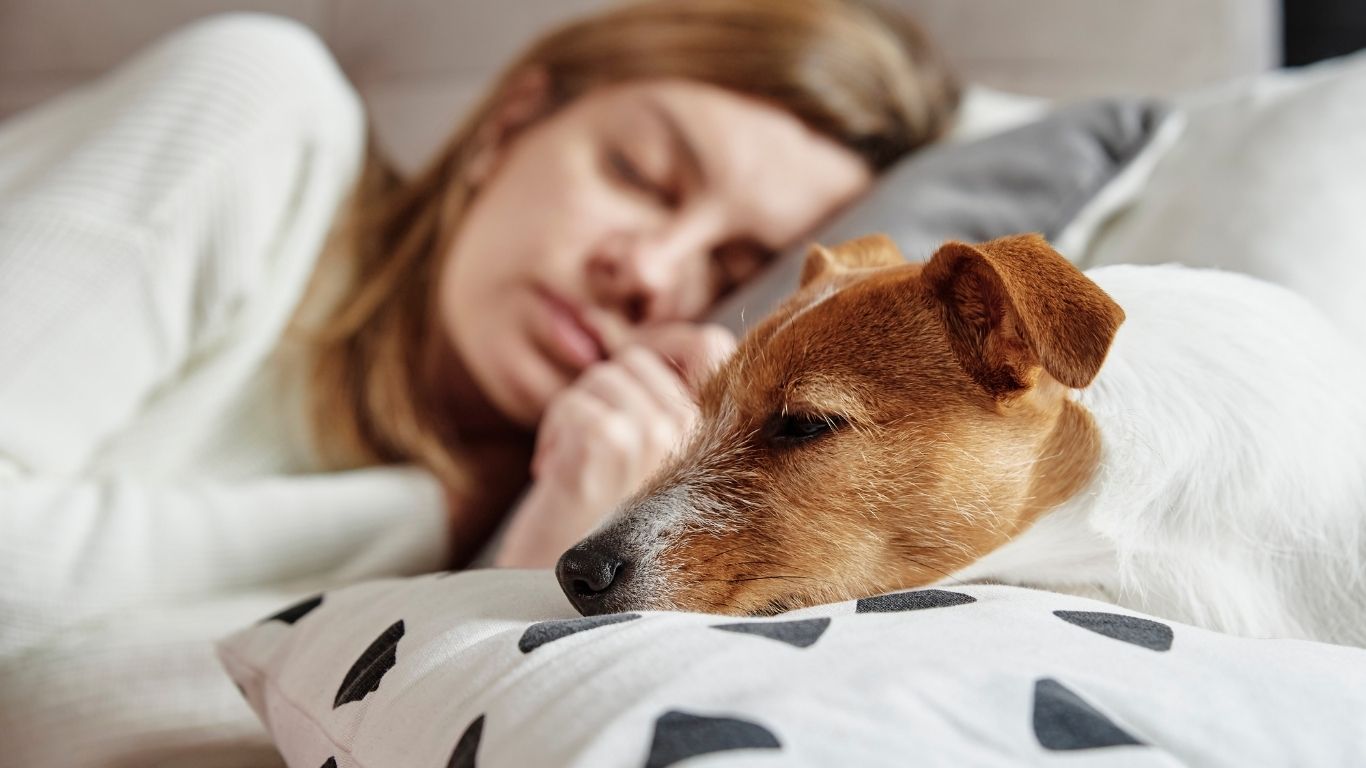
But what I slowly learned was that dogs don’t need perfection — they need connection, safety, and love. My dogs didn’t judge me for skipping long hikes; they were just as happy curled up beside me on the sofa. When I had energy, I’d scatter their food in the garden or play a few minutes of tug. When I couldn’t, I leaned on friends to help. And what surprised me most: my dogs gave me a reason to keep going. Their wagging tails, soft nudges, and quiet presence grounded me in ways therapy alone never could.
If you’re living with illness — whether it’s depression, chronic pain, fatigue, or something else — you may also have worried about whether you can keep caring for your dogs. The good news is: with adjustments, support, and kindness toward yourself, you don’t have to give them up. Here’s how to make things work.
Recognizing the Challenges
Illness changes the way we move through daily life. Some days are easier, some harder. You may face:
- Physical limitations: fatigue, pain, mobility struggles, medication side effects.
- Emotional strain: guilt, shame, fear you’re not a “good enough” owner.
- Practical difficulties: dogs still need food, exercise, grooming, and vet care.
These worries are valid. But remember: you are not alone, and many owners have found ways to keep their dogs even during difficult times.
Shifting Expectations and Daily Routines
Dogs thrive on routine — but that doesn’t mean it has to be long walks and constant activity. What matters is consistency and connection.
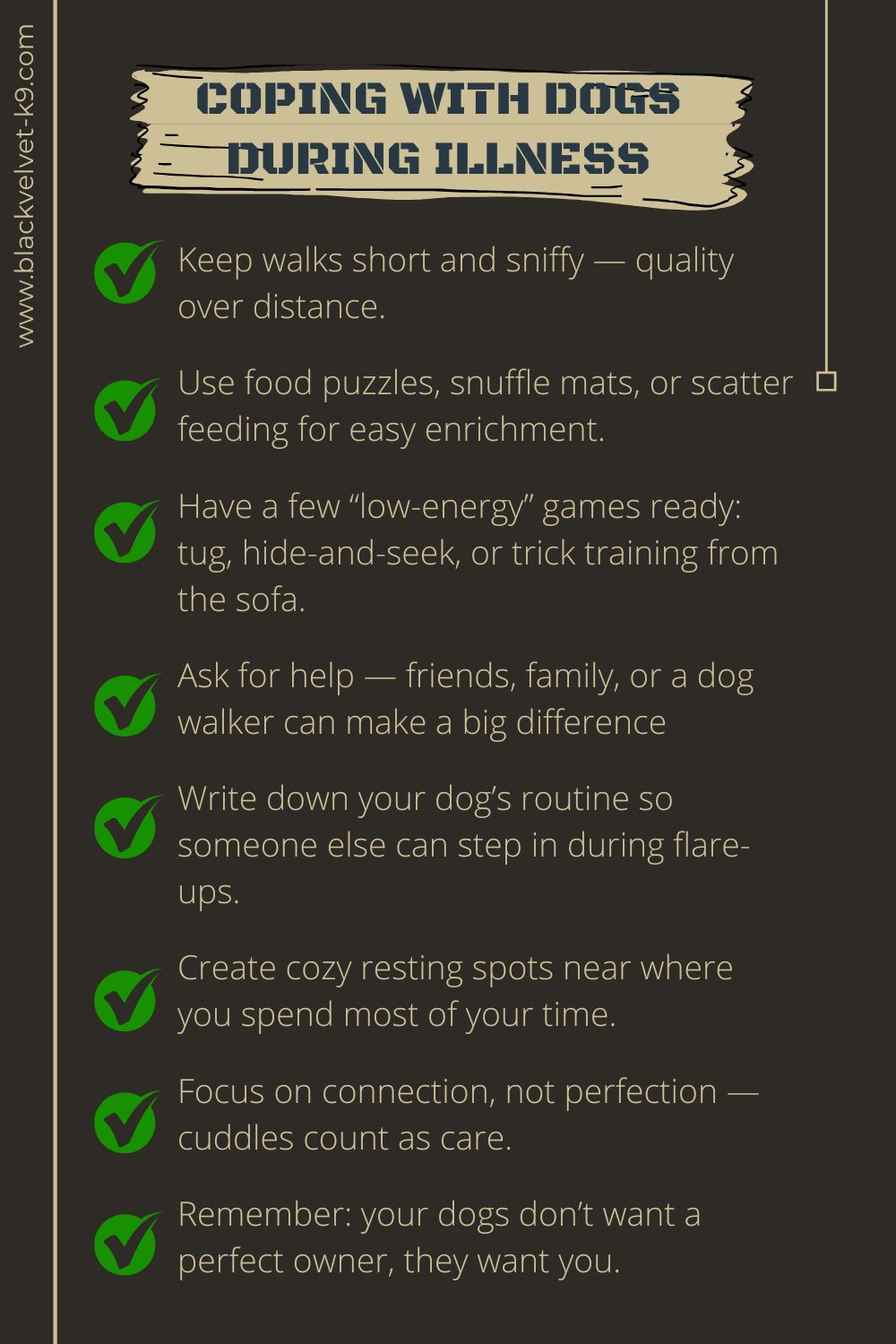
- Shorter walks are okay. Ten minutes sniffing in the fresh air can be more enriching than an hour of power walking.
- Quality over quantity. A few minutes of play or cuddles can mean more than covering miles.
- Release guilt. “Good enough” care still meets your dog’s needs.
Think of it as reshaping the routine to suit both of you.
Mental Enrichment as a Substitute for Physical Activity
When you don’t have the energy for long outings, mental stimulation keeps your dog content. A tired brain is just as satisfying as a tired body.
Some low-effort activities include:
- Food enrichment: snuffle mats, scatter feeding, frozen Kongs, slow feeders.
- Training games: nose targets, “settle,” eye contact, or fun tricks you can teach while sitting.
- Chews and licks: natural chews, lick mats, or safe bones keep dogs happily occupied.
Even five minutes of focused activity can make a huge difference.
Outsourcing Help When You Need It
You don’t have to do this all alone. Sometimes the best thing for your dog is letting others step in.
- Friends, neighbors, or family may be happy to walk or play with your dog.
- Professional help: dog walkers, sitters, or daycare (even once a week) can give you a much-needed break.
- Community support: local pet owner groups often help each other with walks and care.
Asking for help isn’t weakness. It’s love in action.
Building a Support System
A little planning goes a long way, especially if your illness has flare-ups.
- Care plan: write down feeding, exercise, and medication routines so someone else can step in if needed.
- Buddy system: partner with another dog owner — you help each other in emergencies.
- Emergency contacts: keep your vet and a trusted friend’s number handy.
This safety net reduces stress for you and ensures your dog is always looked after.
Adapting the Home Environment
You can also make small changes at home to keep life easier for both you and your dogs.
- Cozy resting spots near where you spend most of your time, so they feel close without demanding constant attention.
- Indoor games: tug-of-war, hallway fetch, hide-and-seek with toys or treats.
- Calm spaces: some dogs settle better when they have a safe, designated area to relax.
This helps your dogs feel secure and entertained without needing big outings every day.
Looking After Yourself Too
Your dogs don’t just need you to care for them — they can also care for you.
- Let them be comfort, not pressure. Their quiet companionship is healing in itself.
- Remember their love is unconditional. They aren’t tallying up how many minutes you played fetch today.
- Celebrate the small wins: you gave them breakfast, a cuddle, a few moments of joy. That counts.
Sometimes, simply sharing space together is enough.
When It Feels Overwhelming
Illness can bring days when it all feels too much. If that happens:
- Recognize signs of burnout and allow yourself rest.
- Consider temporary fostering or respite care — a short-term break, not permanent rehoming.
- Talk openly with your vet, a trainer, or support group about realistic adjustments for your situation.
There are always options before giving your dog up completely.
Conclusion – Adaptation Over Rehoming
Dogs don’t need perfect owners. They need love, safety, and consistency. Illness may mean you can’t do everything you used to, but it doesn’t mean your dogs won’t thrive with you.
Be gentle with yourself. Accept help. Focus on connection instead of perfection. Your dogs are happiest not with someone who can walk them five miles a day, but with you. And with creativity and support, you can make sure they stay right where they belong — by your side.