Have you ever wished you could tell your dog the exact moment they did something right? That’s exactly what a marker does.
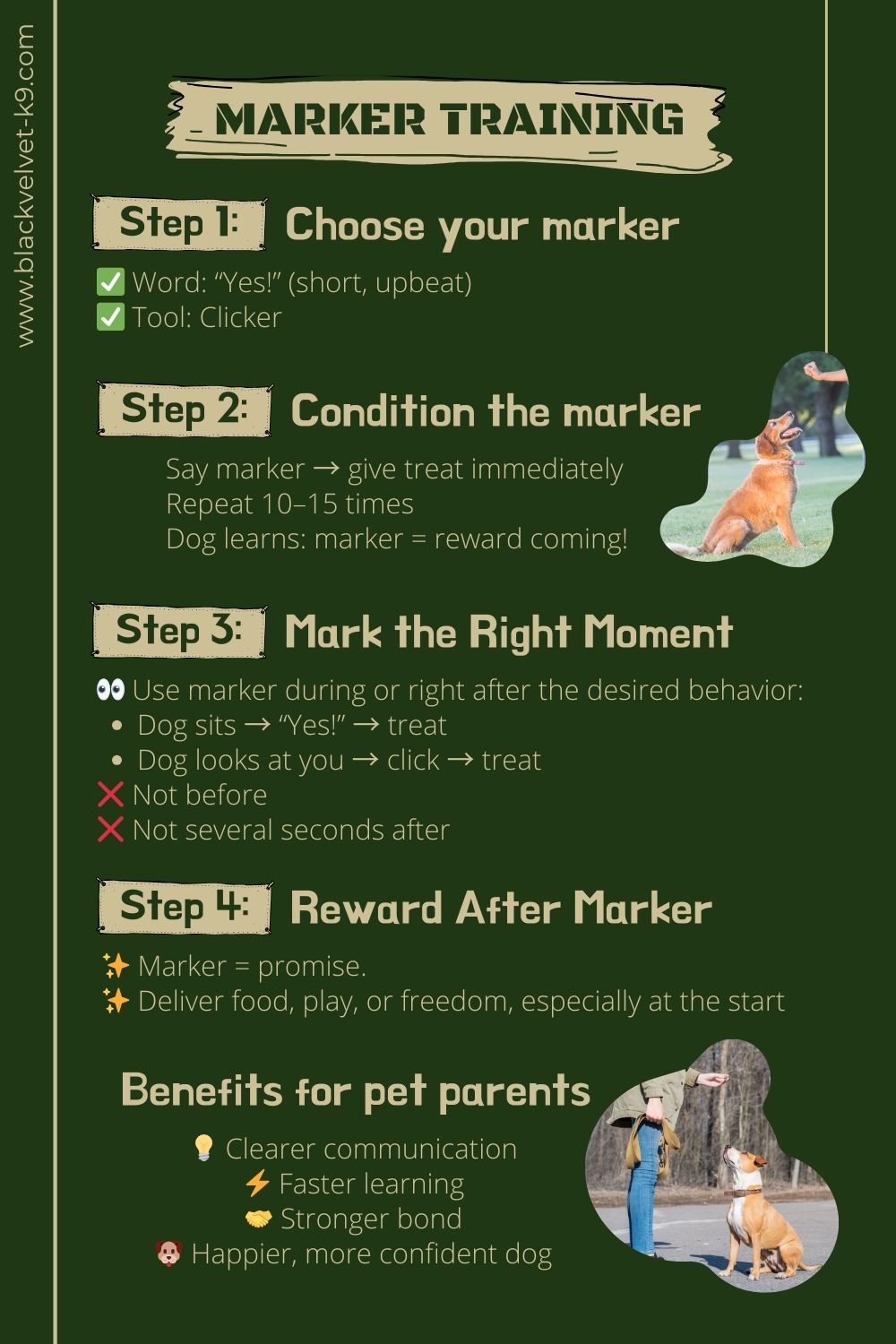
A marker is a short, clear signal — like the word “Yes!” or the click of a clicker — that tells your dog: “That’s it! You just earned a reward.”
It’s one of the most important tools in modern, reward-based training. When used properly, a marker makes learning faster, clearer, and more fun for both you and your dog.
What Is a Marker in Dog Training?
A marker is a sound (word or click) that communicates to your dog, with perfect timing, that they performed the correct behavior. Think of it as a snapshot: it captures the exact second your dog got it right.
For example:
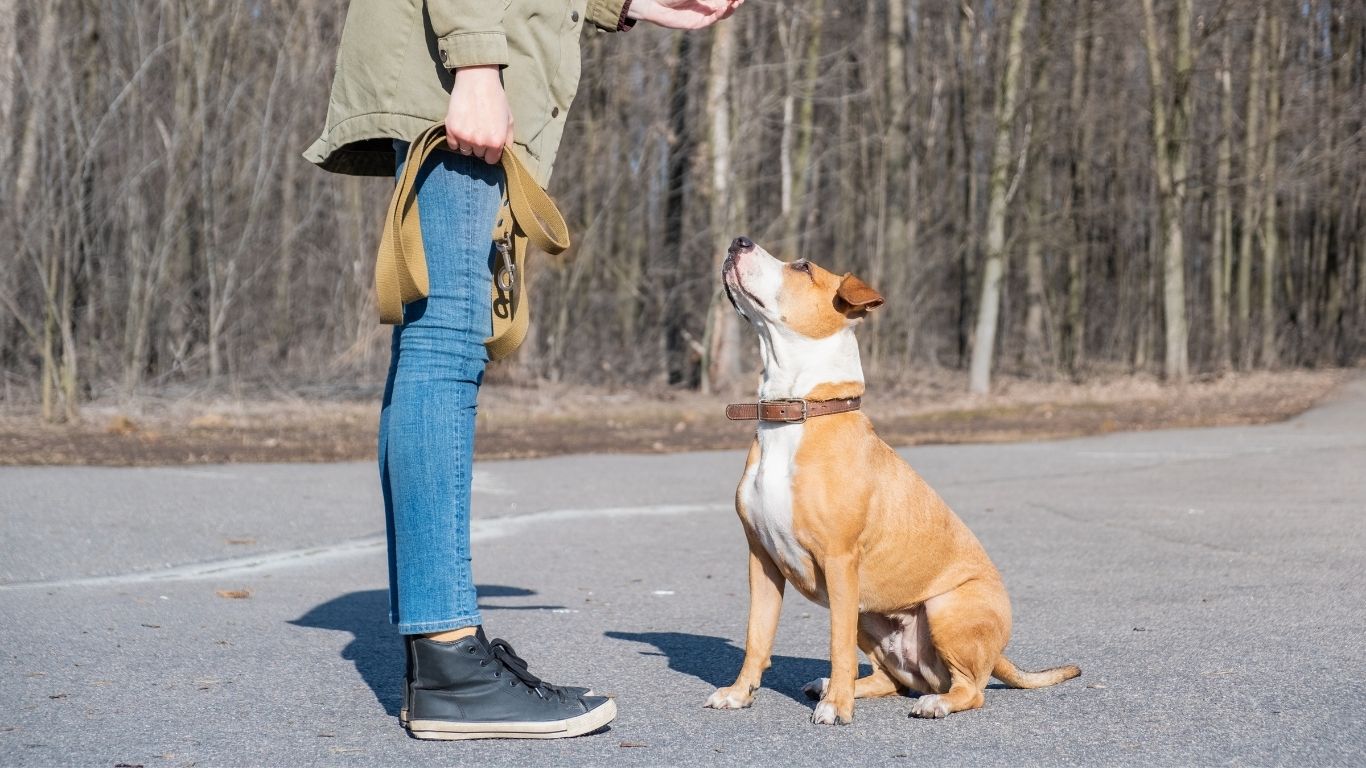
- Dog sits → you say “Yes!” → treat follows.
- Dog looks at you on a walk → click → treat follows.
Over time, your dog learns: marker sound = I did the right thing, and a reward is coming.
Why Markers Matter
-
Clarity – Dogs live in the moment. A marker lets you tell them precisely which behavior earned the reward. Without it, they may not understand what action you liked.
-
Timing – You may not always be able to give the reward instantly (e.g., you’re reaching for the treat bag). The marker bridges the gap, reassuring your dog: “Don’t worry, the reward is on its way.”
-
Faster Learning – Clear communication speeds up training. Dogs learn behaviors more quickly and repeat them more reliably when they understand exactly what’s being rewarded.
-
Consistency Across Rewards – Whether the reward is food, play, or freedom to sniff, the marker always means: That was right. Reward incoming.
How to Condition a Marker
Before you start using a marker in training, you need to teach your dog what it means.
- Pick your marker word (commonly “Yes!”) or a clicker.
- Say the marker → immediately deliver a treat.
- Repeat 10–15 times in short sessions.
This step is called conditioning the marker. Your dog doesn’t have to do anything yet — they’re just learning that the sound always predicts a reward.
How to Use the Marker Properly
Once your dog understands the marker = reward, you can begin using it in training.
? Mark during or immediately after the correct behavior.
- Dog’s bottom hits the floor → say “Yes!” → reward.
- Dog makes eye contact → click → reward.
❌ Don’t mark too early (before the behavior is finished).
❌ Don’t mark too late (several seconds after). Dogs may link the marker to the wrong action.
Remember: The marker is the promise. Once you use it, you must follow with a reward — especially in the early stages.
Everyday Life Benefits
-
Polite Manners: You can instantly “capture” good behavior, like lying calmly on a mat or waiting politely at the door.
-
Faster Training Sessions: Dogs stay motivated and engaged when communication is crystal clear.
-
Stronger Bond: Your dog learns to trust that you’ll always deliver on your promise, strengthening your relationship.
-
Confidence Building: Dogs feel more secure and eager to try new behaviors when they understand exactly how to succeed.
The Big Picture
A marker may be just a small word or click, but it’s one of the most powerful tools in your training toolkit. By conditioning it properly and using it with good timing, you create a clear communication channel that speeds up learning, builds trust, and makes training a fun, rewarding experience for your dog.
So next time you’re training, remember: mark the moment, reward the effort, and watch your dog shine. ?✨