
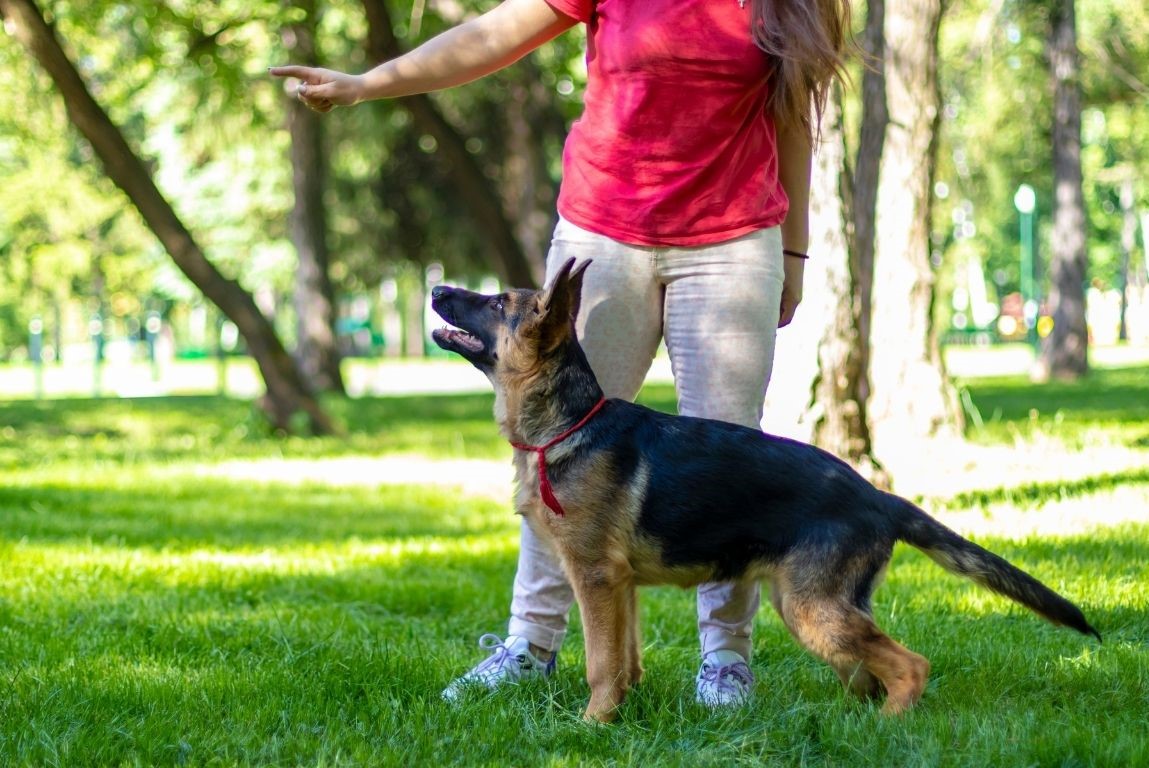
When most people picture dog training, they imagine leads, treats, and structured exercises. But what happens when you take the lead away and rely only on trust and communication? That’s the essence of liberty work.
Liberty work—training without physical restraint—isn’t about letting your dog “run wild.” Instead, it’s about creating a partnership where your dog chooses to stay engaged with you because they want to, not because they have to.
Why Liberty Work Matters
1. Building True Connection
Without the safety net of a lead, you and your dog are communicating on a deeper level. Your voice, body language, and energy become the cues, and your dog learns to respond out of trust and understanding.
Example: I often play a game I call “mirror walk” with my dog. I slowly move around the garden, sometimes walking backward or spinning in a circle, and she mirrors my movements without a lead. It’s a playful way to connect while honing her attention to me.
2. Enhancing Focus and Engagement
In liberty sessions, dogs discover that staying near you, checking in, and following your direction is fun and rewarding. This builds voluntary attention—a priceless skill in real-world scenarios.
Example: During a “circle around” exercise, I stand still while my dog weaves around me in a circle before returning to sit by my side. At first, she needed treats to understand, but over time she did it purely for the fun and praise.
3. Encouraging Natural Movement
When the lead is removed, dogs move more freely. This freedom lets you observe their genuine body language, confidence, and willingness. It also allows them to experiment, make choices, and learn self-control.
Example: In a liberty recall exercise, I let my dog explore a field, calling her casually. She chooses to run toward me, slows down near obstacles, and even stops to sniff, learning self-control while making her own decisions.
4. Testing Reliability of Training
Liberty is the ultimate test. Does your dog come when called? Will they walk by your side without a lead? If they can do it in liberty, you know the behaviour is truly learned and understood.
Example: I practiced “follow my pace” in our local park. I’d start walking, then pause suddenly. My dog had to decide whether to continue forward, circle back, or wait. Over time, she reliably stayed by my side, showing our training was solid.
5. Developing Calmness and Confidence
Because liberty work often starts in low-distraction environments and gradually builds up, dogs gain confidence at their own pace. Over time, they learn how to handle bigger challenges calmly and thoughtfully.
Example: My dog was initially nervous around busy streets. In liberty work, I first practiced recall and focus games at home, then in a quiet park, then near busier paths. Step by step, she gained confidence and learned to remain calm even with distractions.
How to Start Liberty Work
1. Begin in a Safe Space – Use a secure garden, training field, or enclosed area. Safety is key.
2. Keep Sessions Short and Fun – A few minutes of focus, play, and engagement are more powerful than long drills.
3. Mix Training With Play – Liberty is not just about obedience; it’s about joy. Try games like:
- “Follow the Leader” – Move around and let your dog mimic your pace and turns.
- “Circle Sit” – Have your dog circle you and sit by your side at the end.
- “Toy Recall” – Toss a toy a short distance, then call your dog to bring it back calmly before playing.
4. Celebrate Small Wins – If your dog checks in with you or follows your movement freely, mark and reward.
5. Progress Slowly – Increase distractions only when your dog is thriving at the current level.
A Personal Note
When I first started liberty work with my own dog, I felt nervous—what if she just ran off? But something magical happened. Without the lead, she tuned into me more. She trotted by my side during our “mirror walk,” stopped when I stopped, and her eyes lit up when I praised her. The absence of a lead didn’t mean a lack of control; it revealed the strength of our bond.
Final Thoughts
Liberty work isn’t just a training method—it’s a relationship test and a trust-building exercise. By working without a lead, you give your dog freedom of choice. And when they choose to stay connected with you, that’s when the real magic happens.